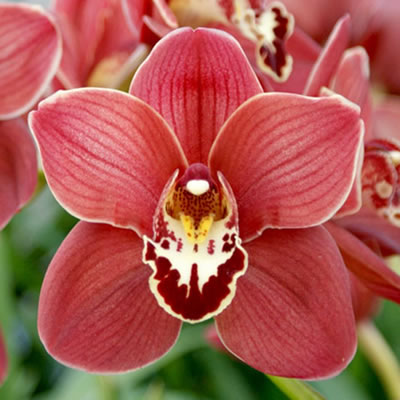
Cymbidium Orchids....
Cymbidium is the oldest cultivated orchid, and there is evidence that they were grown in China 2500 years ago in records from 500 BC at the time of Confucius.
It is one of the easiest orchids to cultivate and, provided that certain rules are stuck to, it will flower year after year.
Temperature and Humidity.
Conservatories or cool greenhouses suit these plants where night temperatures above 46°F can be maintained. During Autumn, Winter and Spring, night temperatures should not exceed 55°F.
They can also be grown in the home, but to initiate flower shoots they must have cool nights throughout the Spring and Summer months. If you've a garden or patio, we advise that you stand the plants outside towards the end of May until the middle of September when the night temperatures start to drop.
Humidity should be between 50% and 75%.
Air movement .
Good air movement is essential for Cymbidium growth. Ventilate the greenhouse whenever the weather permits. A strong fan to circulate the greenhouse air is also beneficial. Plants standing outside will be well ventilated.
Light. Fairly strong light at 2500-3000 ft. candles is good for these plants. If they are grown in a conservatory or greenhouse then 50%-60% shading is needed during the summer months to prevent leaf burn and overheating.
If you are growing them outside in summer, early morning sun is ideal, but do provide some shade against the strongest sunlight.
Watering. Never allow the plants to dry out and always keep the compost moist.
Normally, watering once each week is sufficient but, during the hot summer months it may be necessary to water twice weekly. Try to water in the morning, before midday which will avoid the possible loss of new growths. Whenever possible use rainwater. Fertilizing. Use a well-balanced orchid fertiliser (ratio 20-20-20) at the recommended strength throughout spring and summer. Flush the compost through with pure rainwater at every fourth watering. Reduce the fertiliser strength to half the recommended dose through Autumn and Winter.
Potting and Dividing.
The best time to repot and divide Cymbidiums is between the end of February and until the end of June. The plants always grow better if they are contained. Never over pot. Only repot into plant pots where there is just enough room for the following year's growth. If the plants have outgrown your greenhouse and you think that they need dividing, then, using a sterile knife, cut the plant, at the underground rhizome to give divisions each of which should have not less than three bulbs. Using an orchid compost of peat and bark, plant these divisions into the moistened compost. Do not water for at least three weeks, moisten with a hand-spray just to keep the leaves, bulbs and compost from drying out. Start to water when the newly potted divisions start to root.
Categories orchids, culture cymbidium orchids, orchid society, north of england.